Dr Mary McCaffrey
 of the Scotia Clinic explains what Non Invasive Prenatal Testing (NIPT) is and how it works…
What is NIPT?
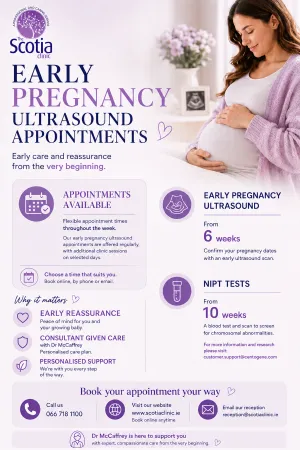
Non-Invasive Prenatal Testing (NIPT) is a screening test performed during pregnancy to assess the chance that a baby has certain chromosomal conditions.
It is done using a simple blood sample from the mother and can usually be performed from 10 weeks of pregnancy onwards.
How does it work?
During pregnancy, small fragments of the baby’s DNA circulate in the mother’s bloodstream. NIPT analyses this DNA to estimate the likelihood of specific chromosome conditions, including:
• Down syndrome (Trisomy 21)
• Edwards syndrome (Trisomy 18)
• Patau syndrome (Trisomy 13)
The NIPT test performed at The Scotia Clinic also screens for certain sex chromosome conditions and determines the baby’s gender if parents wish to know this information.
As part of the process it is important to perform an ultrasound to ensure accurate dating and to confirm the number of babies. This is very important for an accurate test result. It is also important to be aware that NIPT does not identify concerns such as spina bifida.
How accurate is NIPT?
NIPT is the most accurate screening test currently available for common chromosomal conditions. It detects more than 99% of pregnancies affected by Down syndrome, with a very low false-positive rate. However, it is important to remember that NIPT is a screening test, not a diagnostic test.
A high-risk result does not mean that the baby definitely has a chromosome condition. Similarly, a low-risk result greatly reduces the chance but cannot completely rule it out.
What happens if the result is high risk?
If NIPT indicates a high chance of a chromosome condition your doctor will discuss the result with you and may recommend a diagnostic test, such as amniocentesis, to confirm the diagnosis.
Are there any risks?
NIPT is safe for both mother and baby because it only requires a blood sample from the mother. Unlike invasive diagnostic tests, it does not increase the risk of miscarriage.
Should I have NIPT?
The decision to have NIPT is a personal one. Some parents choose the test because they want more information about their baby’s health during pregnancy, while others prefer not to have prenatal screening. We can help you understand the benefits and limitations so you can make the decision that is right for you.
Key points to remember
• NIPT is available from 10 weeks of pregnancy.
• It is a safe blood test with no risk to the baby.
• It is the most accurate screening test for common chromosome conditions.
• A low-risk result is reassuring but does not guarantee the baby is unaffected.
• A high-risk result should be confirmed with a diagnostic test before any decisions are made.
If you have questions about NIPT or prenatal screening, speak with your healthcare provider, who can explain your options and support you throughout your pregnancy.
• Contact The Scotia Clinic on 066 71 81100 or go to the website https://scotiaclinic.ie/